
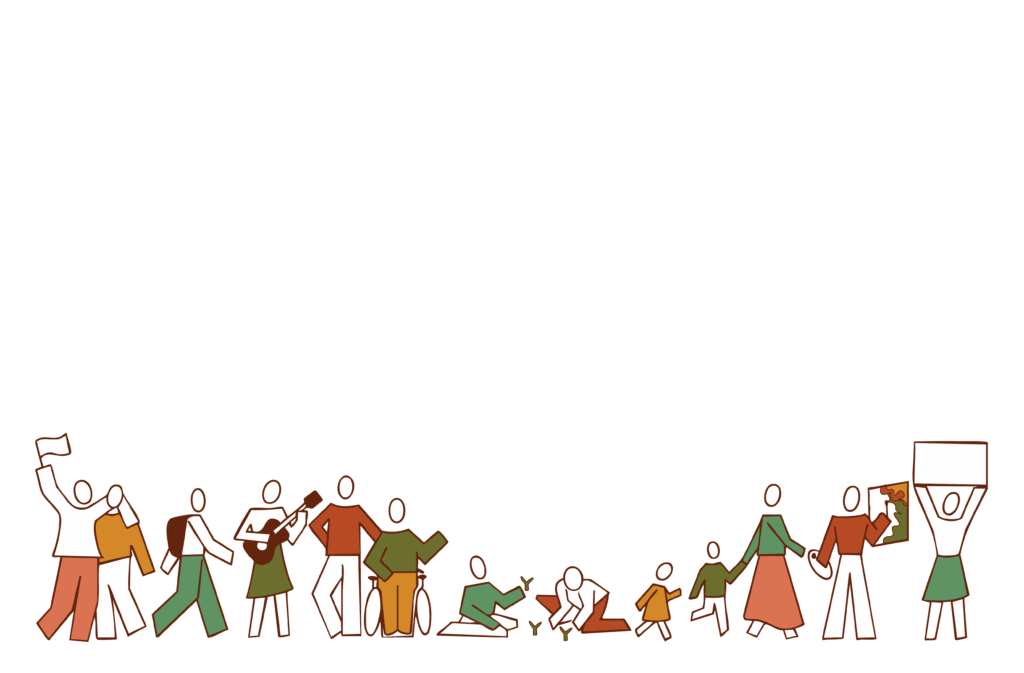
Story and Illustrations by Lexy Howard
Design by Marcel Edgington
Having spaces where people can show up and be seen and accepted is important. You can go to multicultural organizations to be seen in culture, churches to be seen in faith, clubs to be seen in interests and classes to be seen in your passions. Would you enter a space where you are not seen or not welcome?
Unwelcome is how many interviewed students feel after the diversity, inclusivity and equity offices in the college closed. Community acceptance creates strong bonds and a sense of belonging. Idaho’s movement toward an increasingly conservative state eliminates those community spaces for many University of Idaho students.
“It’s affected me and a lot of people around me, community wise,” said Anthony Gonzales, President of Organization de Estudiantes Latinos Americanos and UNITY. “The resolution basically just stripped the office of any ability to put on cultural events.”
These events help the students of UI create a strong community within an educational environment. According to the American Psychiatric Association, one in three Americans feel lonely most of the time. In an increasingly divisive social climate, the importance of community becomes known.
In the Fall of 2024, the Idaho state legislature passed a resolution that bans diversity, equity, and inclusion operations within public universities in Idaho. As a result, the Women’s Center, the Multicultural Center, the LGBTQ+ Center and the African American Center were closed.
“[DEI] is spoken about as if it’s illegal,” experimental psychologist and Moscow resident Gretal Leibnitz said. Leibnitz works to support women in STEM through federal DEI grants. “But it’s not illegal. There’s been no federal laws that have been created yet. It is simply an executive order.”
Diversity, equity and inclusion frameworks support those who do not have the same societal opportunities as those who historically did – those who are white, cisgendered and male. This language to some, however, can appear exclusionary and was the main reason for the dissolution of diversity, equity and inclusion groups within Idaho. This is part of a movement towards the federal dissolution of DEI groups.
“Language alienated the people that had the greatest power to affect the change by not bringing them into the conversation,” Leibnitz said. Because of this exclusion, those with the power challenged DEI. In this overwhelming time, we must understand the task of community and the gift that we create by coming together.
What can we do to create community? Some suggestions are to give back to yourself and to your community, stand with those who want to speak out about the many issues that face us, elevate the voices of marginalized communities by correcting harmful language when you hear it and do your research about the movements that occur within the country.
“I say just stand with your community,” Gonzales said. “It is a very scary and sad time, but I think I think now more than ever is the time that we should be coming together in unity.”
Find your community; what are your values and why do you speak out? These questions can help you build a solid foundation of values to allow you to keep your momentum in aiding those around you.
“If there’s something that makes you cry, or if there’s something that makes you rage, you must listen to that,” said Chelsey Lewellen-Byrd, community member, author and UI Apparel Textiles and Design instructor.
If you are curious about what challenges marginalized communities face, look up podcasts and TED Talks, or ask a willing friend to speak of their experiences. Listen to people who have views that differ from yours, be open to misunderstandings and learn tolerance.
Leibnitz says that by doing so, we “create vehicles to bring us back together… we have historically been able to tolerate political differences and still love our neighbors and care for them.”
You don’t have to change people’s minds on a given topic; there is a good chance you won’t be able to. However, by listening to other perspectives, you have the opportunity to broaden your knowledge and capacity for understanding. And by doing so, this opens doors to growing a new community.
Another good way to build community is to reach out. Sharing space with those around us creates a moment for empathy and broader understanding. Let a friend know that you are there for them and can offer a space to talk. Grab a coffee, go for a walk or plan a party to take that extra step. Social media sites like Instagram and Pinterest are good resources for what to do if you get stuck.
Moscow boasts a strong community with many resources to support engagement, unity and creativity. Creativity in times of hardship brings us back to our feelings and thoughts about our experience.
“I think that we must go back to the analogy of the oxygen mask on an airplane,” Lewellen-Byrd added. “I think the first thing that you need to do is put on your own oxygen mask, and for me that means making art and music.”
The group UNITY held a protest when the closures of the DEI spaces became known. The protest showed the decision would impact the student body of UI. Even with the DEI spaces already closed, it is important to gather friends, put up posters, speak up and let your voice be heard.
Now that there are no specific DEI offices, students are looking for other options. Student organizations on campus can freely plan activities. There are many clubs on campus dedicated to art, culture, safe spaces and shared interests. Student resources are available, and clubs can be found on UI’s ‘Engage’ website.
“Creating this club was a way for us to build community,” said Debbie, Secretary of, and Kai, Vice President of, the SOGI-A a LGBTQ+ activist club. “So, [there was] starting it, and [now we are] trying to keep it flowing and getting more people to join… we have [found] community in our club and found other likeminded people.” The responsibility falls to the student body to take over the safe spaces; by joining in, you can come together and lighten the load.
Through community, we create hope and wellbeing. The resounding message from the students and faculty that contributed to this article is that you are not alone. You only need to take the first step – send that text, email, letter. The first step can lead you on a journey of hope, and you’re taking that journey alongside many others.