
Story by Robert Skilton and Lea Cloward
Photos by Connor Anderson and Argonaut Archive
Moscow is located on top of the intersecting Native lands of the Nimiipuu (Nez Perce), Palus (Palouse) and Schitsu’umsh (Coeur d’Alene) tribes. Archeological evidence shows their arrival on this land dates back more than 4,000 years ago. That’s the same time at which the Great Pyramids of Giza were being built! The varying elevations and abundance of water resources allowed for a thriving and diverse ecosystem of plants and fauna. This made Moscow the ideal spot for nomadic peoples to live and gather for thousands of years. While it is not the fault of the University of Idaho, they recognize their occupation of Native land and hold it a responsibility to build relationships with indigenous peoples and honor their voices.
Originally, the capital of the Idaho Territory was “Lewiston,” which is a short drive south of Moscow. Lewiston was and still is an immensely popular sea harbor for trade, meaning the city and surrounding areas such as Moscow grew rapidly. The first permanent non-native settler came to Moscow in 1871, but at the time it wasn’t known as Moscow. Rather, it was dubbed as “Hog Heaven,” due to the abundant Camas Bulb (a relative of the asparagus plant) being a favorite grazing food of pigs. This meant that many farmers settled in the area to not only grow the size of their livestock, but to farm the vast, free rolling hills. A year later, in 1972, the name of the town was changed to “Paradise Valley,” after the installation of the first post office. A short time later, in 1877, the area had already established itself as a hotspot for businesses then officially became a federally recognized town named “Moscow.”
There is some debate on where the name “Moscow” came from. There are claims that it was done to copy the Russian capital, but there is no actual proof.
Another possibility is that it was derived from the name of a local Native settlement called “Masco.” The third and most widely accepted theory is that five townsmen who had met to decide on an official towns name could not come to a decision, so the local postmaster Samuel Neff took the responsibility into his own hands. He filled out the official paperwork for the town dubbing it “Moscow” after his original hometown of Moscow, Pennsylvania. In other words, Moscow, Idaho is not directly named after the Russian capital. It’s named after a town that’s named after the Russian capital.
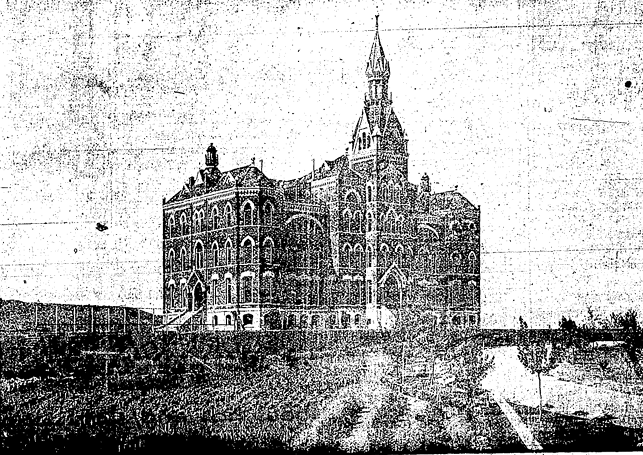
By 1885, the international railway had made its way to Moscow bringing a large influx of residents looking for cheap land to make a living on. This quickly made Moscow the second largest town in all of Idaho, though local panhandle residents lobbied to split from Southern Idaho territory due to distance from the new capital Boise leaving the area disconnected from the rest of Idaho. Locals either wanted to become their own state or join Washington, who, at the time, was very close to achieving statehood. To appease the panhandle people, officials in Boise chose Moscow as the spot for the Idaho Territories Land-grant institution in 1889 and had the University open and operating by 1892. A land grant institution means Moscow received federal funding to build the University of Idaho and continues to receive federal funding to maintain itself. Though not officially a state yet, this aimed to unify the northern and southern Idaho Territory for when it officially achieved statehood in 1890, thus making Idaho the 43rd state to join the United States. Funny enough, this makes Moscow older than the state it resides in.
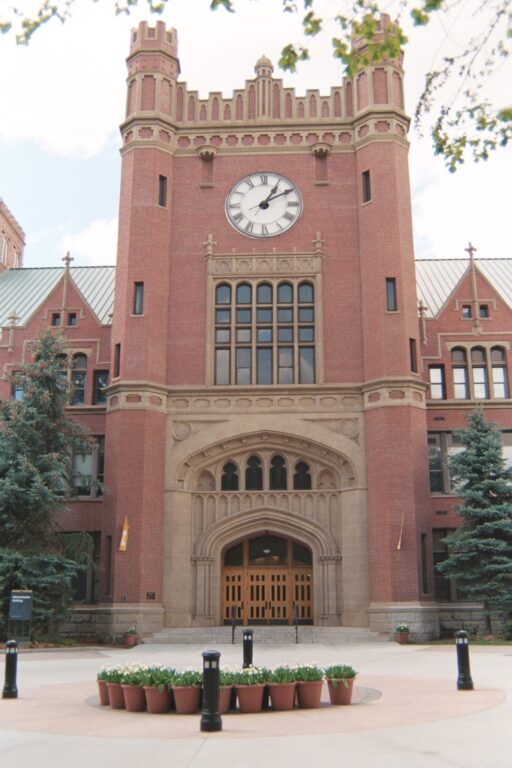
In 1906 UI experienced a fire in the original Administration building which was the largest building on campus for classes even though UI was still a small school with only a few hundred students. Most of what was there was destroyed, so in response, the city and school used the insurance money to hire the famous Olmsted brothers to develop a master plan for the campus layout. The Olmsted Brothers were a well-known architecture firm at the time known for their work designing the U.S. Capitol grounds and Central Park in New York City. Their plan was completed in 1908, and heavily utilized gothic architecture which can still be seen on a myriad of buildings to this day such as the new Administration building, Art and Architecture North and the Memorial Gym.
Like much of the U.S. Moscow was affected by the Great Depression. Agriculture, a primary economic driver for the region, suffered due to falling crop prices, reduced demand, and droughts. Moscow’s economy was heavily reliant on farming, and many families faced hardship. UI played a vital role in maintaining the town’s economy. Despite the Depression, the university continued to grow, offering education and training to residents and still attracted students from abroad and providing a partial remedy to the otherwise difficult times. Growth of this heavily agricultural town still slowed even after the Great Depression and has mainly seen a steady growth since the early 1900’s.
This is very obviously attributed to university students settling in the area, which has kept growth in the area stimulated and bringing Moscow to a population of over 25,000 resident and students as of today.
During World War II, the U.S. saw a boom in economic activity to support the war effort and pull us out of the Depression. Agricultural towns like Moscow were hugely important in the production of food and supplies. Though population and school attendance dropped due to so many men enlisting in the army until after the war was over. The following post war years then saw record numbers of men going to college for the first time due to GI benefits which lead to a large increase in student enrollment and expansion of the UI campus and the city. Moscow’s new population growth demands more services, businesses, and housing which spurted a new focus on urban development and not so officially solidifying Moscow as a prosperous college town.
In 1967 UI and its school of music started jazz festival that was only a small event until 1985, when the school renamed the festival and its school of music on campus to honor the death of popular jazz icon Lionel Hampton. Heavy reinvestment was made in the music program by the overseers, which has now made the Lionel Hampton School of Music not only a top music school to attend but also the host of one of the biggest yearly events on campus and the largest jazz festival west of the Mississippi, with up to 5,000 students from over 200 schools around the world. It’s a multiday event across 20 locations around the UI campus and Moscow that includes workshops and performances from professionals in the jazz industry.
By 1980 growth in Moscow’s downtown had almost completely stalled due to the popularity of the shopping mall and the highway diverting traffic away from downtown and its businesses. To bring growth back to the heart of Moscow there was a huge reconstruction effort to reroute the highway, improve the streetscape to make it more walkable and build the downtown plaza. While it was a huge cost for the city, it once again made downtown a thriving center of public life helping bring a variety of unique local businesses and events that we still enjoy to this day.
The economic prosperity of Moscow had us looking outside to support others that don’t have the same opportunity. So, in 1986, the city commission partnered with sister cities international to form a partnership with Villa El Carmen, a town and county of 40,000 people near the Pacific Coast of Nicaragua. The aim has been to support their educational needs by exchanging students between the two cities, donating equipment, supplies and repairs to the public schools of Villa El Carmen. As well scholarships and donations are given to students and struggling families, but this can only be accomplished by donations to the Moscow sister cities association who handles all fees of the program.
The city leaders and community members recognized that the arts could contribute to the cultural vitality of Moscow, enriching the lives of its residents and making the city a more vibrant and engaging place to live. So, in 1991, the city established the “Moscow Arts Commission.” This new commission aimed to enhance the cultural landscape of the city through public art projects, cultural events, and community engagement in the arts, due to the blandness of the long popular international architectural style that focuses on function of form. The commission since then has played a vital role in promoting local artists and fostering community pride through various artistic endeavors such as the Art Walk, Palouse Plein Air and other various art showings consistently held throughout the city. UI has taken on collaborating with the Moscow Arts Commission and Idaho Arts Commission consistently which has further increased the abundance of local art and art careers available to locals and students.
UI in recent years has been the main catalyst for many events in the area now that the school has amassed such size. UI has managed to achieve the highest graduation rates of any public university in Idaho and generates up to 74% of all research money in Idaho, meaning it offers the best opportunities to attend significant conferences and research initiatives that impact the community and beyond, especially when it comes to advances in the agricultural and botanical fields. Like many cities and countries across the world, COVID-19 did great damage to businesses and events in Moscow, but as of late, there has been a great uptick in public life. Fall 2024 admission has had its largest freshman class ever, with Fall 2022 being the second largest freshman class and Fall 2023 being the third largest. Three consecutive years of record-breaking admission have not only shown students’ eagerness to get back to school but also have helped re-stimulate businesses that had previously been declining from the pandemic.
Moscow, Idaho has a rich history shaped by its founding in 1872, primarily as a hub for agriculture and education. Over the years, Moscow has faced economic and social challenges but responded with various initiatives to develop a vibrant cultural scene.
Moscow is now known for its strong sense of community, educational institutions and focus on sustainability, reflecting the city’s evolving identity while honoring historical roots.